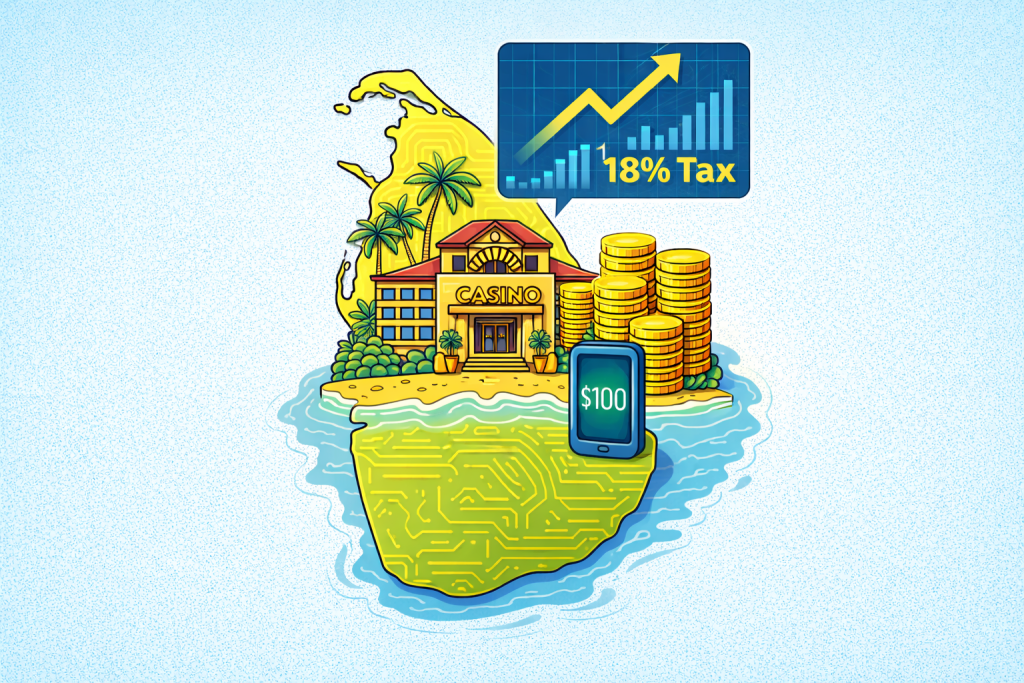
On January 1, 2026, the landscape for the South Asian iGaming industry underwent a transformation. Sri Lanka implements an 18% Gross Collection Levy and doubles casino entry fees for patrons.
Casino operators and foreign investors are now navigating a more costly—but also more formalized—regulatory environment as the Inland Revenue Department formally implemented the tax increases authorized in late 2025. What does the new rule mean for casino operators? Let’s discuss below.
The New Financial Framework
The Sri Lankan government, pressured by a persistent public deficit and international creditors, has moved to maximize the fiscal yield from the gaming sector through two primary levers:
1. Increased Gross Collection Levy. Betting and gaming businesses are now subject to an 18% tax on gross collections.
2. Doubled Patron Entry Fees. To control local participation while targeting high-spending international tourists, the entrance fee has been hiked from $50 to $100.
For casino owners, this is a signal of a maturing market transitioning toward the “Integrated Resort” (IR) model seen in Singapore and Macau. An increase in Gross Collection Levy is intended to support state coffers and bring Sri Lanka closer to its regional rivals, such as the Philippines and Vietnam.
The Way to Tier-1 GEO
Sri Lanka is currently at a crossroads. The government is in the final stages of establishing the Gambling Regulatory Authority (GRA). Historically, the country’s gaming sector operated in a “grayer” area with fragmented oversight. The introduction of the GRA, coupled with higher taxes, indicates a move toward a transparent, Tier-1 regulatory environment.
Current Trends in the Region
The Rise of Integrated Resorts. With projects like the $1.2 billion Cinnamon Life Integrated Resort coming online, Sri Lanka is shifting its marketing focus toward high-net-worth individuals (HNWIs) from India, the Middle East, and Southeast Asia.
Tax as a Gateway to Legitimacy. While higher taxes are a burden, they often come with increased legal protections for operators and a clearer pathway for foreign direct investment (FDI).
What This Means for Casino Owners and Investors
For owners, the 18% levy necessitates a “yield management” overhaul. Low-margin, high-volume local play is becoming less common. Instead, the market is pivoting toward a high-margin, premium-experience model.
1. The $100 entry fee acts as a psychological and financial barrier. Marketing teams must now pivot their strategy to justify this cost, focusing on luxury amenities, world-class entertainment, and VIP junket services that make the $100 fee feel negligible.
2. The creation of the GRA is a net positive for long-term valuation. Institutional investors and international banks are more likely to fund expansions in a market that has a centralized, predictable regulator, even if the tax rate is higher.
3. The tax changes regional competition. At 18%, Sri Lanka remains competitive against Macau (which nears 40%) but faces stiff competition from the Philippines (which recently lowered some tax rates for integrated resorts to attract investors).
What You Should Learn from This
For marketing professionals, tech providers, and strategic partners, the Sri Lankan case offers three lessons:
Growth Begins with Regulation
While tax hikes are often viewed negatively, they signal that a government is ready to formally protect and grow the industry. For partners, this is the time to offer compliance tech, AML (Anti-Money Laundering) solutions, and sophisticated CRM tools to help operators manage their new tax burdens.
Marketing Should be Luxurious
When entry costs double, the marketing narrative must change. Operators can no longer market a night out; they must market “an exclusive destination.” This necessitates a change to high-end partnership ecosystems (private aviation, five-star hotel tie-ins, and luxury car rentals) and personalized digital marketing.
Data-Driven Efficiency is Mandatory
With an 18% bite out of gross collections, operators will see an increased demand for data analytics to optimize floor performance and player reinvestment strategies. Every square foot of the casino floor must now work harder to maintain the same ROI as in 2025.
Takeaways
The combination of the new tax regime and the impending GRA oversight marks the control of South Asian iGaming. For the prepared operator, this is an opportunity to capture a more affluent demographic in a more stable, professionalized market.
For those looking to partner with Sri Lankan casinos, the focus should be on value-added services that help these venues transition into the premium, highly regulated entities. Contact us to learn more about profitable partnerships!